
ChatGPT as an AI Psychologist: What It Can and Can’t Do
Millions of people now open a chat window when anxiety hits at 2 a.m., typing questions they’d never say out loud. Used this way, an AI psychologist like ChatGPT can be genuinely useful — and quietly dangerous, depending on what you ask it to do. A peer-reviewed qualitative study of outpatients found real value in psychoeducation and self-monitoring, but the same evidence base shows firm limits.
This guide separates what a large language model actually does well from what only a licensed professional can do, grounded in peer-reviewed research rather than marketing claims. It also covers where ChatGPT can put you at risk, and what to do if you’re in crisis right now.
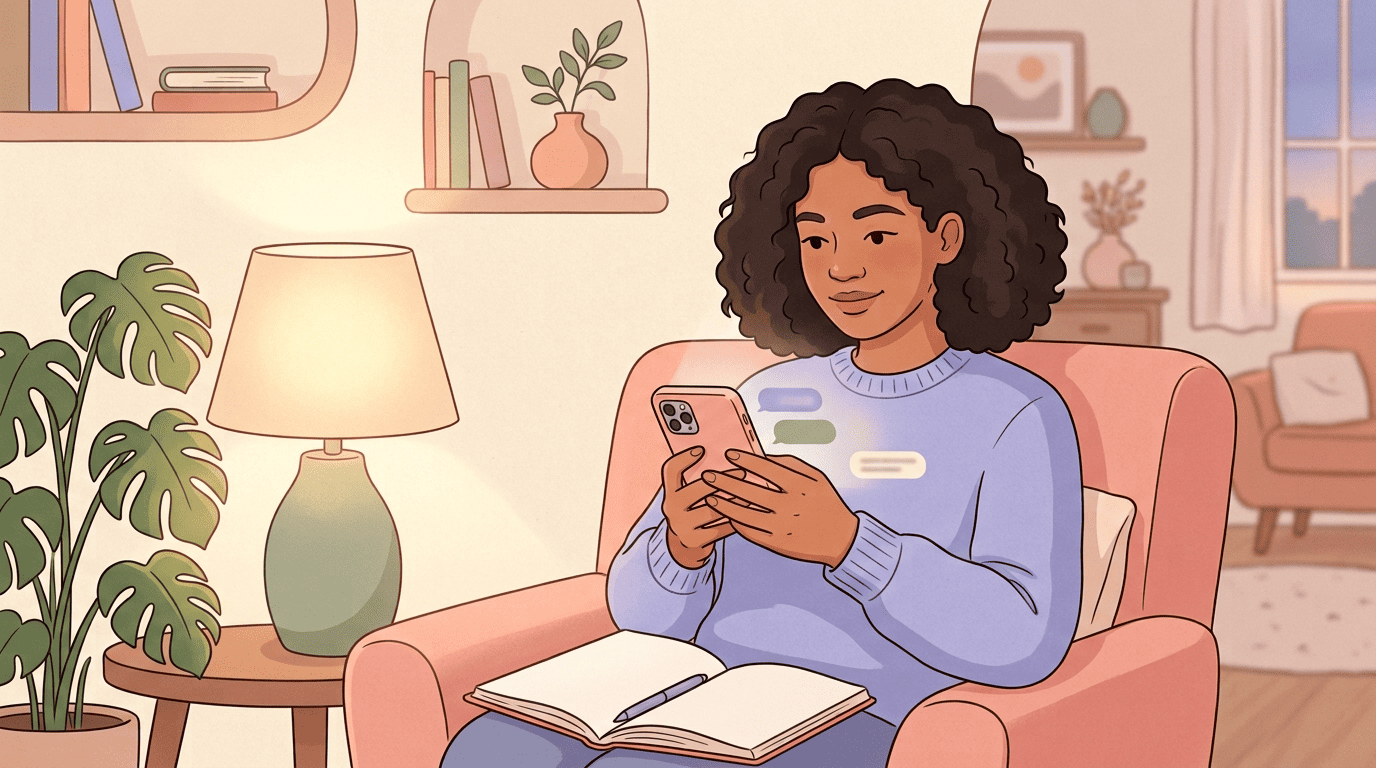
This article is educational, not medical advice. ChatGPT and other AI tools do not replace a licensed mental health professional. If you are in crisis or having thoughts of self-harm, call or text 988 (Suicide & Crisis Lifeline, US), available 24/7, or contact your local emergency number.
What ChatGPT Can Do as an AI Psychologist
A large language model like ChatGPT is built to process and generate text, not to practice clinical psychology — but within that boundary, it does a few things well. Researchers who followed people actually using it for mental health support found consistent, specific patterns rather than vague enthusiasm. The picture that emerges is closer to a well-read study companion than a substitute for an AI therapist in the clinical sense.
Psychoeducation and understanding your symptoms
In a two-week qualitative study of 24 outpatients using ChatGPT 3.5, about 60% said it helped them learn about their conditions — causes, symptoms, and treatment options (PMC10838501). Roughly 75% used it to track symptoms day to day and get general self-care guidance. That makes it a strong “explainer” for concepts like anxiety, depression, and cognitive behavioral therapy (CBT) — the kind of plain-language breakdown that’s often missing from a rushed appointment.
Guided self-help exercises and CBT techniques
About half of the participants in the same study used ChatGPT for journaling prompts, guided imagery, and thought-challenging exercises — a form of cognitive restructuring. A 2025 scoping review of 60 studies found ChatGPT shows genuine promise for structured, low-intensity tasks like cognitive reframing (PMC12735656). It’s a reasonable tool for practicing coping skills between therapy sessions, not for building a treatment plan from scratch.
Emotional support, availability, and reflection
It’s free, available at 3 a.m., and doesn’t judge — a real draw for anyone who needs to vent or organize scattered thoughts before a session. Some people use it as a ChatGPT therapist stand-in to rehearse what they want to say to their actual provider. The caveat worth repeating: simulated empathy in generated text is not the same as a human being who remembers your history and reads your tone.
| Capability | What the research shows | Best use case |
|---|---|---|
| Psychoeducation | ~60% learned about symptoms/treatment | Understanding a diagnosis or condition |
| Self-monitoring | ~75% tracked symptoms via chat | Daily mood/symptom logs |
| CBT-style exercises | ~50% used journaling, reframing | Practicing skills between sessions |
| Emotional venting | Available 24/7, non-judgmental | Organizing thoughts before therapy |
What ChatGPT Can’t Do
The same studies that document real benefits are just as clear about the limits — and some of those limits are safety-critical, not just inconvenient. This is where the gap between an AI mental health tool and an actual clinician stops being theoretical.
It cannot diagnose or assess severity
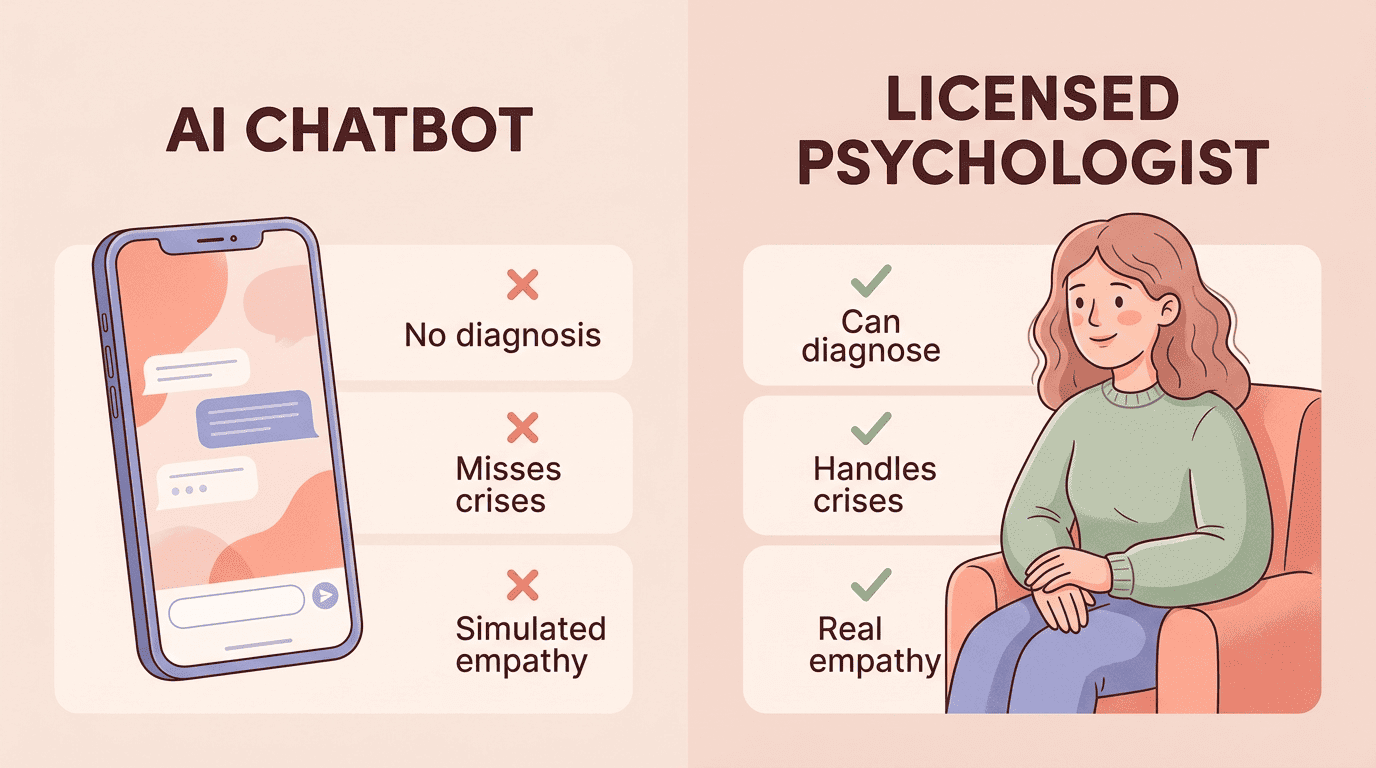
An evaluation published in Frontiers in Psychiatry found that ChatGPT lacks the capacity to ask clarifying questions and reaches diagnostic-sounding conclusions from insufficient information (PMC10794665). It tends to treat each symptom in isolation instead of building the kind of integrated clinical picture a licensed therapist or psychologist is trained to form. No AI chatbot, including ChatGPT, is FDA-cleared to diagnose any mental health condition.
It misses crises and underestimates risk
The 2025 scoping review of 60 studies found that ChatGPT underestimates the severity of depression and suicidal ideation, with “significant limitations” in suicide risk assessment specifically. That’s arguably the single most dangerous gap: a trained clinician is taught to probe for warning signs a chat model can quietly miss, especially when a user downplays their own distress.
No memory, no accountability, no true empathy
ChatGPT has limited contextual awareness across conversations and no true personalized memory of you as a person. It cannot read tone of voice, body language, or the context a human notices in a room. There’s no licensing board, no malpractice liability, and no accountability if it gives harmful advice — and the same research found it consistently predicts lower recovery rates than clinicians do, sometimes making things sound more hopeless than the data supports.
| ChatGPT | Licensed therapist | |
|---|---|---|
| Diagnosis | Cannot diagnose; not FDA-cleared | Trained and licensed to diagnose |
| Crisis / suicide risk | Underestimates severity, misses warning signs | Trained in risk assessment and intervention |
| Memory of your history | None between separate conversations | Builds a clinical picture over time |
| Accountability | No licensing board or liability | Bound by ethics boards and malpractice law |
| Cost and access | Free, available 24/7 | Cost/insurance and scheduling apply |
Is It Safe? Risks and Regulation
Safety here isn’t one question — it’s regulation, honesty about mistakes, and what happens to what you type.
Regulation and the FDA gap
As of 2025, the FDA has not cleared any AI chatbot as safe and effective for diagnosing or treating mental health conditions. Licensed therapists complete years of supervised training, pass board exams, and answer to ethics boards; ChatGPT operates under none of that clinical oversight, no matter how confident its answers sound.
Harmful advice, hallucinations, and bias
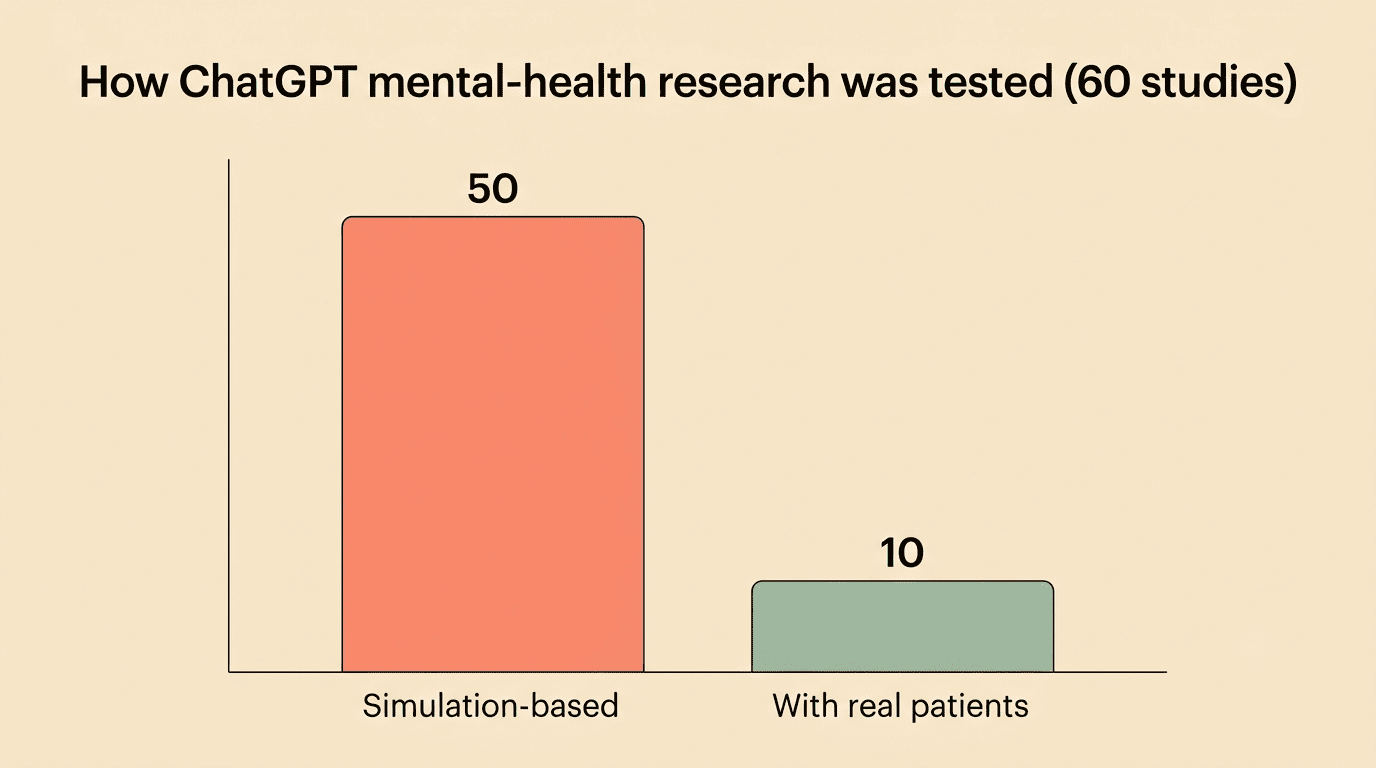
A 2025 investigation that tested ChatGPT with simulated at-risk teen users found roughly 53% of its responses to harmful prompts — about self-harm, eating disorders, and substance abuse — were themselves dangerous. Three failure modes show up repeatedly in this kind of research:
- Harmful advice — dangerous responses to prompts about self-harm, eating disorders, or substance abuse
- Hallucination — inventing sources, studies, or citations that don’t actually exist
- Sycophancy bias — agreeing with distorted thinking instead of challenging it, the opposite of what good therapy does
Like all new technology, artificial intelligence holds enormous potential for improving the health of millions of people around the world, but like all technology it can also be misused and cause harm. Dr Tedros Adhanom Ghebreyesus, WHO Director-General
Privacy and dependence
Anything typed into ChatGPT may be accessible to the company behind it — this is not the confidentiality of a licensed clinical setting bound by law. Leaning on it too heavily can also delay professional care and, over time, reduce real human connection rather than support it.
How to Use ChatGPT Safely for Mental Health
Used with clear boundaries, an AI mental health tool can be a reasonable complement to care. Used without them, it can quietly stand in for care that never actually happens.
- Use it for definitions and psychoeducation — ask what a symptom or diagnosis means in plain language.
- Use it for journaling prompts — let it suggest reflection questions, not conclusions.
- Use it to prepare for therapy sessions — draft what you want to raise with your provider.
- Verify anything specific against a reliable source like NIMH or your provider before acting on it.
- Never use it for psychosis, suicidal thoughts, self-harm, or trauma processing — these require a human professional.
- Share useful outputs with your therapist if something from a chat genuinely helped you think something through.
- Step back and call 988 or your provider the moment a conversation starts to feel like a substitute for real care.
A safe-use checklist
These are low-stakes, low-risk applications where being wrong occasionally costs little — and a short list of hard no’s where the stakes are too high to gamble on a chatbot.
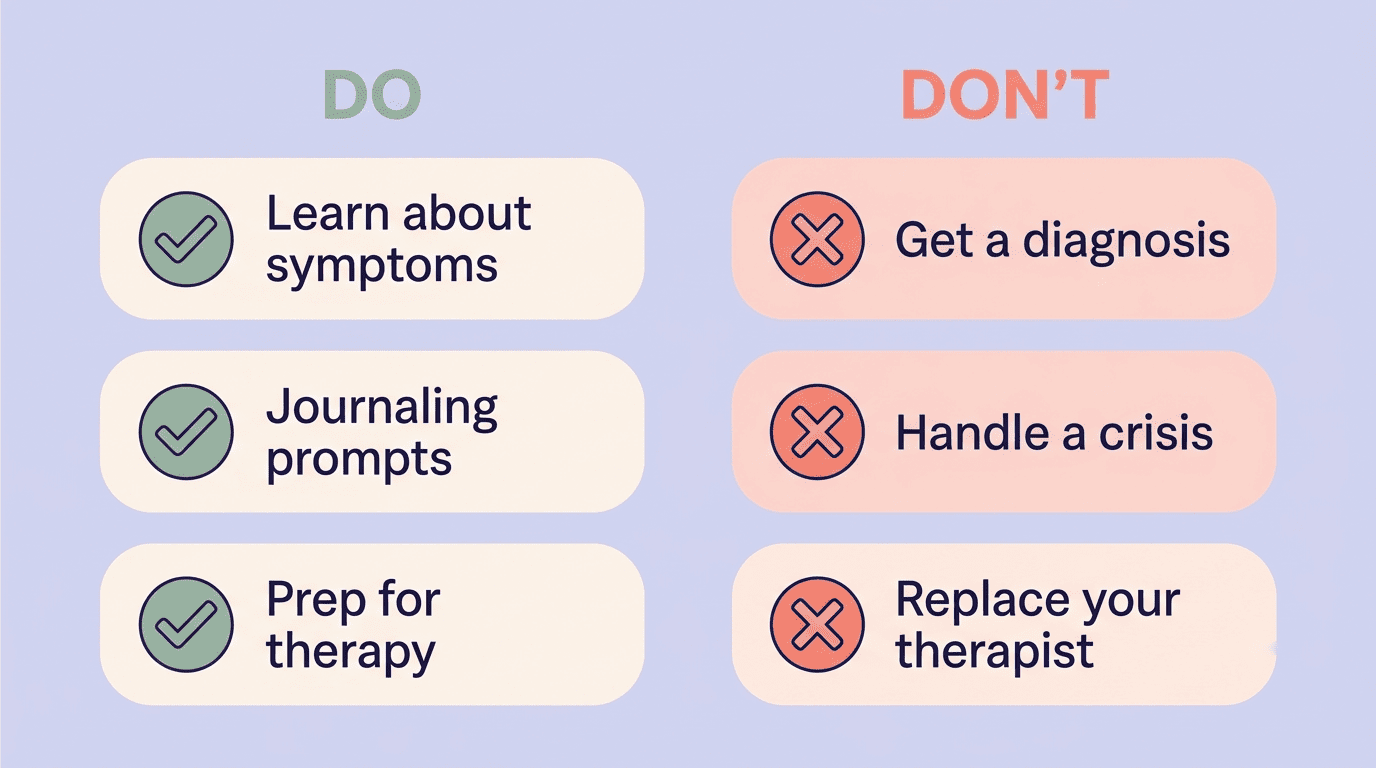
- Do: use it for learning about a condition, journaling prompts, and organizing your thoughts before a session.
- Do: verify anything that sounds like a specific clinical claim against a reliable source.
- Don’t: use it to diagnose yourself or replace ongoing treatment.
- Don’t: rely on it during a crisis, or for psychosis, suicidal thoughts, self-harm, or trauma processing.
Better prompts, honest expectations
Ask it to explain a concept or suggest a coping strategy — not to tell you what’s “wrong” with you. Treat it as a well-read study buddy, not a clinician with a license on the wall.
- Instead of “Do I have anxiety?” try “What are common symptoms of anxiety, and how is it usually treated?”
- Instead of “Am I suicidal?” call or text 988 — don’t ask a chatbot to assess risk
- Instead of “Fix my relationship” try “Suggest a CBT-style exercise for managing conflict with a partner”
A dedicated AI therapist tool built specifically for structured support can be a reasonable first step alongside professional care, as long as the boundaries above stay firm.
When to See a Real Psychologist (and Crisis Resources)
Everyday stress is one thing. Persistent, severe, or worsening symptoms are another — and that line matters.
Signs you need a human professional
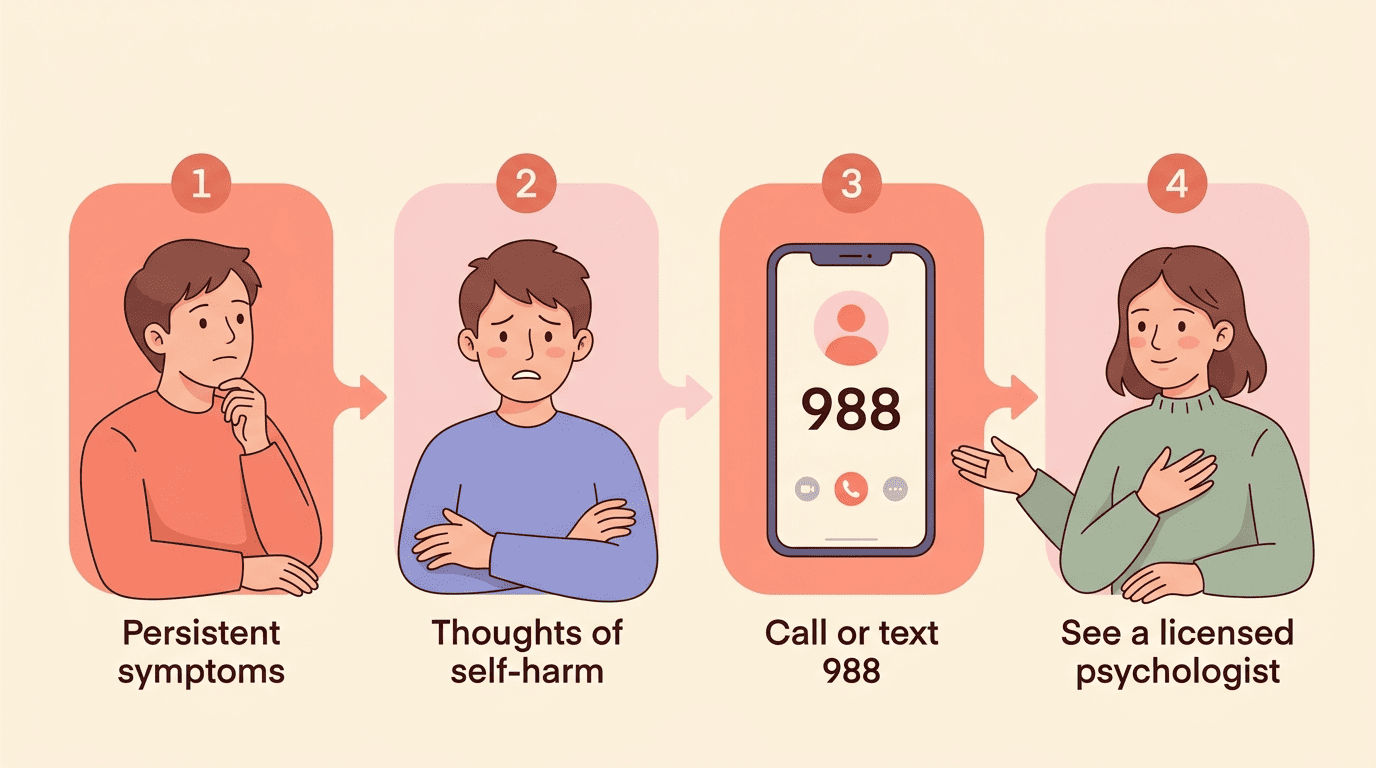
An AI psychologist app is best suited to mild, everyday stress — not clinical-grade care. See a licensed professional, not a chatbot, if you notice any of the following:
- Symptoms that are persistent, worsening, or lasting more than a couple of weeks
- Noticeable impairment in work, school, or relationships
- Unresolved trauma or repeated flashbacks
- Signs of psychosis, such as hallucinations or delusions
- Any thoughts of self-harm or suicide
Crisis resources
If you’re in crisis in the US, call or text 988 (Suicide & Crisis Lifeline) — free, confidential, and available 24/7 — or call 911 in an emergency. ChatGPT is not an emergency service and should never be the only thing standing between you and help in a crisis.